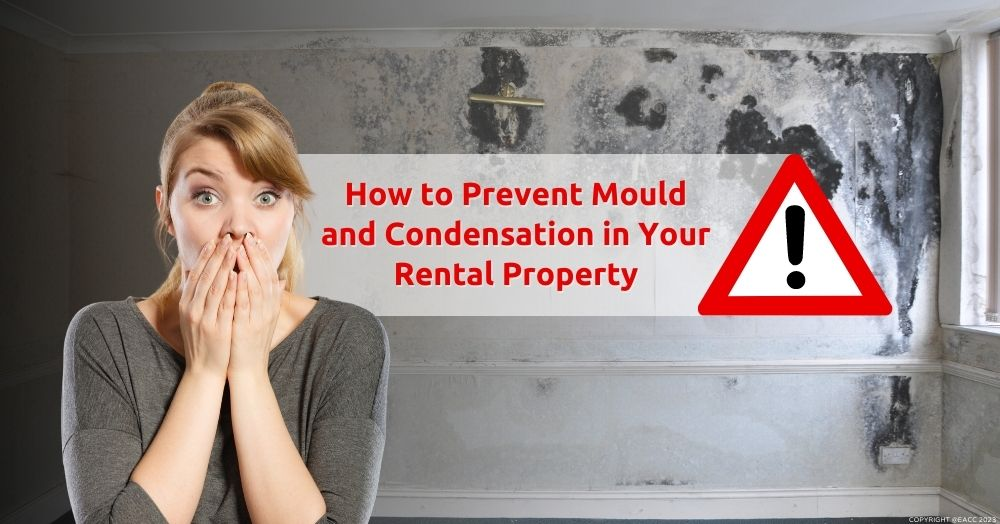
How to Prevent Mould and Condensation in Your Rental Property
This lettings piece looks at how to combat condensation and mould.
How can landlords and tenants combat condensation and mould? Read on to find out.
Condensation and mould
The two are often bundled together because if you’ve got condensation, there’s a good chance it won’t be long before you’re battling mould.
Condensation can be caused by warm air hitting cold surfaces or by lots of humidity in the air. The air cools and droplets form, creating a damp environment – and a perfect breeding ground for mould.
Mould grows in black, green or brown spots. It’s most commonly found in bathrooms and kitchens but can thrive in any damp or humid location.
Responsibilities
Both landlords and tenants have roles to play in preventing and tackling mould.
The landlord must ensure there are no structural or maintenance issues that could cause mould and remove mould impacting a tenant’s health and safety.
Tenants should keep the property clean and adequately ventilated and report signs of mould to the landlord.
If the cause of mould isn’t structural, it could be down to tenant behaviour (more on this further down).
It’s important to look for constructive solutions to resolve the issue rather than getting involved in a finger-pointing exercise.
Steps a landlord can take
A dry home with lots of fresh air is the best weapon against mould. To achieve this, you should:
· Ensure the property is well-ventilated.
· Check the heating is working well.
· Insulate the property.
· Look for signs of mould during regular inspections and ensure extractor fans are working.
· Promptly repair issues such as leaky plumbing and guttering, missing roof tiles and damage to the damp-proof course.
· Regularly clear out gutters and drains.
· Act quickly if mould appears. Remove it and apply anti-mould paint.
· Discuss the issue with tenants to raise awareness.
How tenants can help
Ask tenants to:
· Avoid hanging clothes to dry indoors with the windows closed.
· Leave a gap between furniture and walls of at least 10cm so the air can circulate.
· Open windows regularly.
· Use the extractor fan when cooking and showering.
· Wipe down wet surfaces such as shower screens and curtains.
· Close the kitchen door when cooking to stop moist air moving to other parts of the property.
· Report signs of mould and any necessary repairs to the landlord or letting agent.
For more advice about managing your rental property, contact us today.