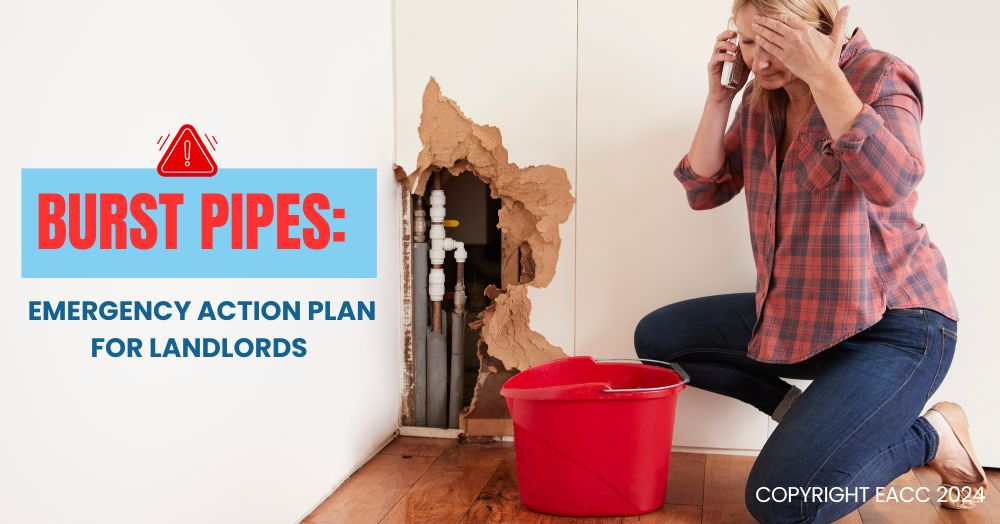
Burst Pipes: Emergency Action Plan for Landlords
If a pipe bursts at your rental, quick action will save you time and money. Here’s what landlords need to know.
To steal a quote from Game of Thrones ‘Winter is Coming’. (Well, ok it’s here already.)
And the colder weather can bring different challenges for landlords, including burst pipes.
Here is some advice for landlords on dealing with (and avoiding) burst pipes at a rental property.
What causes a burst pipe?
In cold weather water in a pipe can freeze. As it freezes, it expands and can split the pipe.
Often a burst isn’t apparent until the ice melts and the water pours out.
Where is most at risk?
Pipes in habitable rooms that are heated are at less risk of freezing. Pipes in cold places, like attics and cellars, are at greater risk.
Outdoor piping, such as in a garage, shed or an outside water tap, is at high risk of freezing.
Tips to prevent a burst pipe
It’s still not too late to do some preventative work. Protect vulnerable pipework with foam insulation or spiral wrap.
Outside taps should be protected with an outdoor tap cover.
Dealing with a burst pipe – action plan
If you get a call from your tenant reporting a burst, consider doing this:
(If you’re a tenant and reading this then check whether you should call your landlord directly or their letting agent. Make sure that you have their number handy.)
· Refer your tenant to your letting agent – if you have one and if they handle maintenance for you. (At times this, a good agent is worth their weight in gold.)
· Ask your tenant to turn off the water at the stop tap (also known as a stopcock). It’s a good idea to leave instructions in your property showing where this is and how to use it.
· Then, ask your tenant to drain the affected pipe by turning on the tap it supplies. This could reduce the damage caused considerably.
· Call in a plumber or home emergency service. (Although this is likely to be easier said than done, especially at Christmas and New Year.) Make a shortlist of who you can call if you don’t already have a plumber.
· Try a temporary fix if you can’t get a plumber immediately. If you have DIY skills, try a temporary repair using pipe repair tape, epoxy resin or a burst pipe clamping kit. These are available from DIY stores.
Of course, a good way for landlords to avoid the problems caused by burst pipes and other emergencies is to hire a good letting agent who can do this for you.
Would someone you know find this article helpful? Why not share it with them?