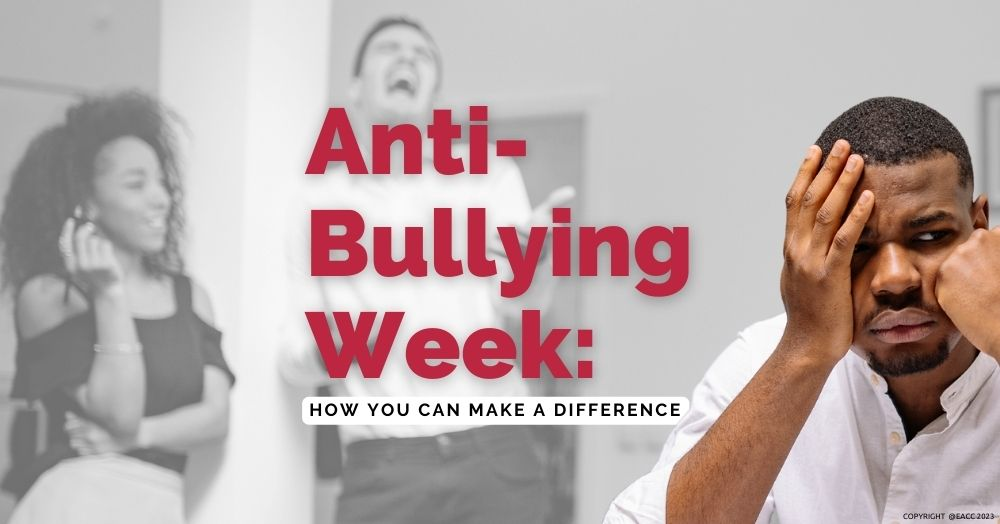
Anti-Bullying Week: How You Can Make a Difference
This week’s community interest article looks at the signs of bullying and the importance of speaking up.
It can happen face to face or online, at work, school or in the community. But whatever form it takes and wherever it occurs, there’s no excuse for bullying.
As this week is Anti-Bullying Week, let’s look at how widespread bullying is, the signs to look out for and how best to deal with it.
How common is it?
While there may be a greater awareness of bullying these days, there’s still a lot of work to do to stamp it out.
22% of people aged 12 – 20 say they experienced bullying in the last year*. While in the workplace, one in ten workers say they’ve been bullied, and 47% say they’ve observed bullying**.
Signs and impact
Bullying can be hugely detrimental to someone’s mental health. It stops people from living their lives as they wish and can cause illness, anxiety and depression and result in self-harm or suicidal thoughts.
Signs a child may be experiencing bullying
- Unexplained injuries
- Difficulty sleeping or bedwetting
- A reluctance to go to school and an increase in headaches or tummy upsets
- Altered eating habits
- Their schoolwork may go downhill
Signs an adult may be experiencing bullying in the workplace
- Loss of confidence and motivation
- Anxiety or depression
- Increased absence from work
- Reduced performance
What to do if you experience bullying
Talk to someone you trust about what you’re experiencing, and consider raising the issue with someone in authority who can take action. (You may discover that other people have raised concerns about your bully’s behaviour, too.)
Also, keep a record of when incidents occur so that if your complaint escalates, you have times and dates to back up your story. Most importantly, don’t blame yourself. The bully’s behaviour, not yours, is the problem.
What to do if you witness bullying
If you’re concerned that someone is being bullied, raise the issue with them privately. You may worry that the person in question will think you’re prying, but most likely, they’ll be grateful that you’re considering their wellbeing.
If they decline your offer to discuss the situation, point out who they could talk to in the school or organisation if they have an issue.
From all of us here at Shaws Kensington, thanks for reading.
* Diana Award Anti-Bullying Programme
** Psychiatry-UK.com